How to Fix Cloudy or Smelly Aquarium Water
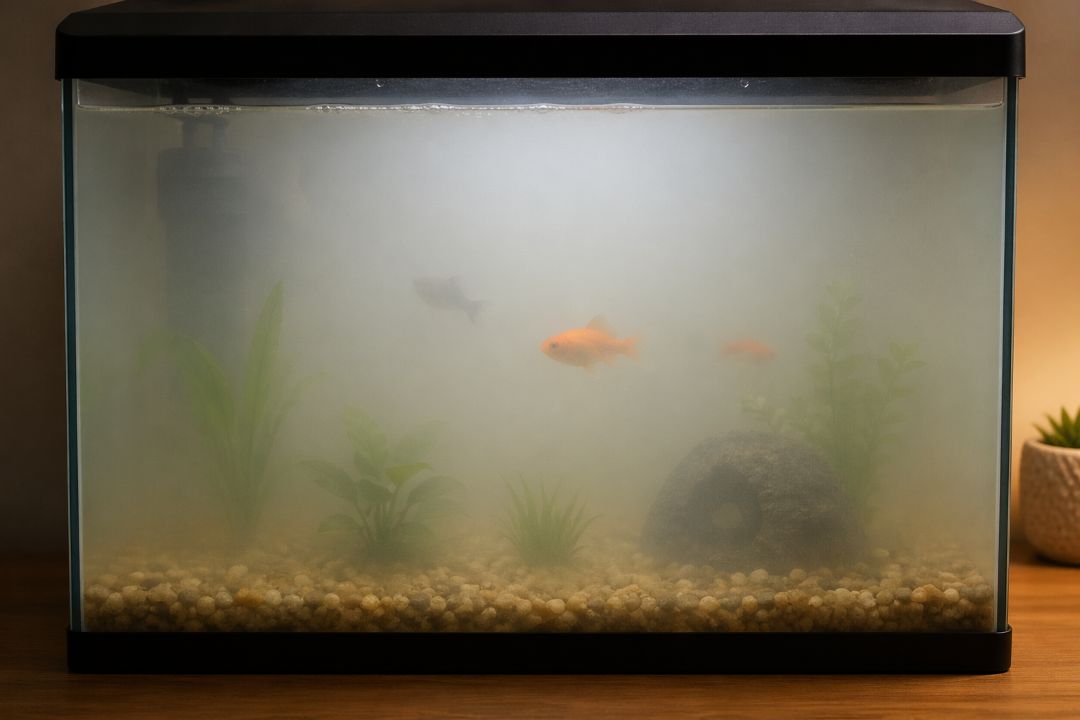
Nothing ruins the look of a beautiful aquarium faster than cloudy or smelly water! Fortunately, both problems are common and easy to fix once you understand what’s causing them. Here’s how to identify the issue and restore crystal-clear, healthy water for your fish.
Why Is My Aquarium Water Cloudy?
Cloudy water can appear white, green, or brown depending on the cause. Below are the most common reasons and how to fix them:
1. New Tank Syndrome (Bacterial Bloom)
When you first set up an aquarium, beneficial bacteria haven’t yet established in the filter and gravel. This causes harmless but unsightly cloudy water.
Fix:
- Be patient – the cloudiness usually clears within a few days.
- Avoid adding too many fish too quickly.
- Test water regularly and perform small water changes.
- Learn more about this process in our Nitrogen Cycle Guide
2. Overfeeding
Excess food decomposes, releasing waste and promoting bacterial growth.
Fix:
- Feed small amounts that fish eat within 1–2 minutes.
- Remove uneaten food promptly.
- Use a gravel vacuum to clean the substrate weekly.
3. Dirty or Overdue Filter Maintenance
A clogged or poorly maintained filter can’t remove debris effectively.
Fix:
- Rinse filter media in removed tank water, not tap water, to preserve beneficial bacteria.
- Replace media as directed, but not all at once.
4. Algae Bloom (Green Water)
Excess nutrients and too much light encourage algae growth.
Fix:
- Reduce light to 6–8 hours daily.
- Avoid direct sunlight on the tank.
- Perform partial water changes weekly.
- Consider adding live plants or algae-eating fish/snails.
5. Stirred Up Debris (Brown or Dusty Water)
Sometimes gravel or décor dust causes temporary murkiness, especially after setup or cleaning.
Fix:
- Rinse new gravel and ornaments thoroughly before adding them.
- Allow the filter to run continuously – it will clear in 24–48 hours.
Why Does My Aquarium Water Smell?
An unpleasant smell usually indicates an imbalance in your tank’s ecosystem.
Common Causes of Smelly Water:
- Rotting food or plants left to decay.
- Overstocking – too many fish producing waste.
- Poor filtration or infrequent cleaning.
- Low oxygen from lack of surface movement.
- Dead fish or snails hidden behind decorations.
How to Fix It:
- Remove any uneaten food or dead livestock immediately.
- Siphon the substrate and perform a 25–30% water change.
- Check your filter flow – clean the impeller and media.
- Add an air stone or adjust your outlet for better circulation.
- Ensure your water conditioner neutralises chlorine and chloramine.
Preventing Cloudy or Smelly Water
- Perform weekly 25% water changes using a gravel vacuum.
- Use Tap Safe to remove chlorine before adding new water.
- Avoid overfeeding – less is more!
- Rinse filter media gently in tank water monthly.
- Keep your aquarium out of direct sunlight to prevent algae.
- Add live plants to absorb excess nutrients.
When to Seek Advice
If your water remains cloudy or smells bad after a week of good maintenance, bring a water sample to Birchwood Aquatic Centre. Our team can test your water for ammonia, nitrite, nitrate, and pH levels and recommend the best treatment for your tank.
Related Guides
Frequently Asked Questions
Is cloudy water harmful to fish?
Not always. In new tanks, it’s usually harmless bacteria settling in. However, persistent cloudiness may signal water quality issues that stress fish.
Can I use water clarifiers?
Yes, but treat them as a short-term fix. Always address the underlying cause (like overfeeding or poor filtration).
How often should I clean my tank?
Perform a partial water change every week and a deeper clean every 4–6 weeks, depending on tank size and stocking.
Why does my tank smell even after a water change?
Check for dead fish or snails, clean your filter, and make sure your substrate isn’t trapping waste.
Will activated carbon help with smell?
Yes, adding carbon to your filter can remove odours and tannins from the water. Replace it every 3–4 weeks. While it is important to supplement filtration with chemical media, it is still important to maintain mostly biological filtration.