First Steps After Buying Aquarium Fish: Beginner’s Guide for New Fish Owners
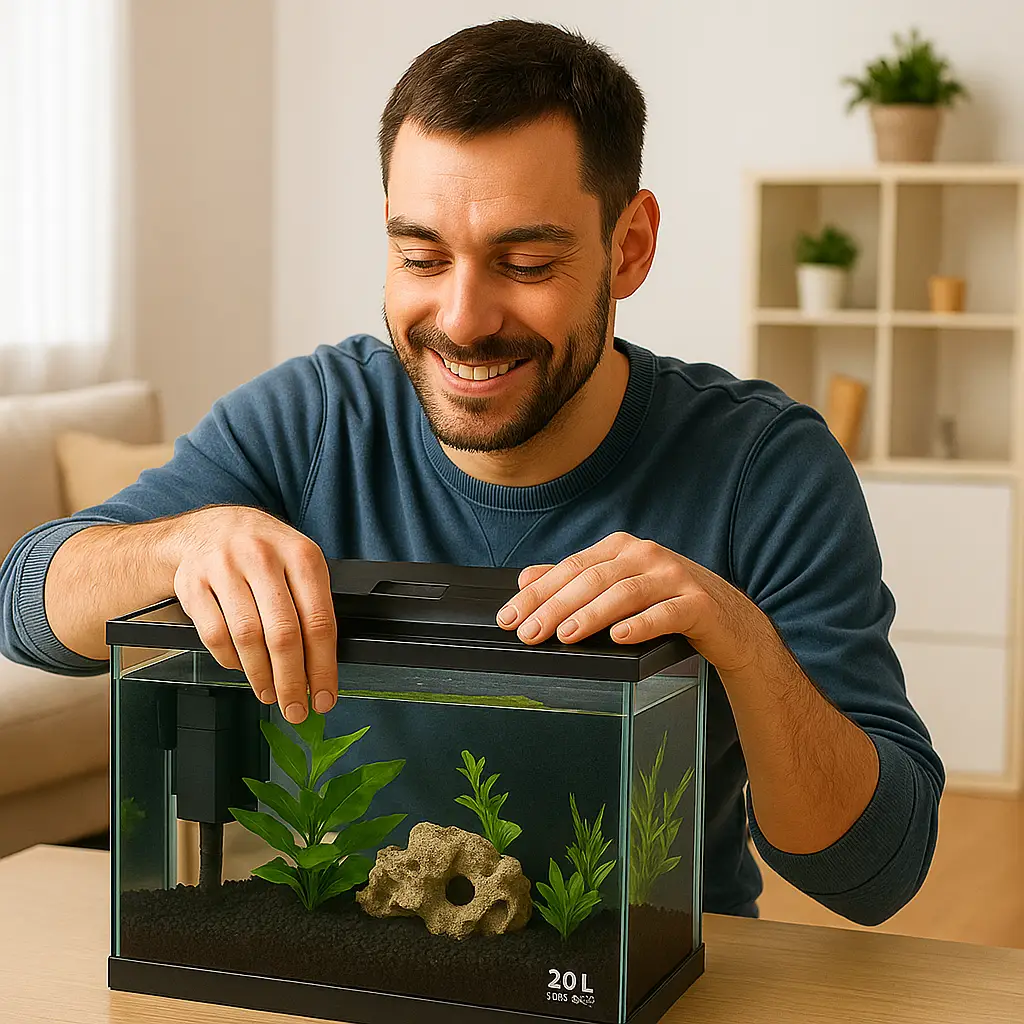
Welcome to your first day as a fish keeper! This quick-start guide walks you through what to do in the first hour, first day, and first week after you bring your new fish home. It’s written for beginners, with notes for both tropical freshwater and marine keepers. If you need help, pop into Birchwood Aquatic Centre or call 01322 664397.
Quick-Start Checklist (First Hour)
- Turn off aquarium lights to reduce stress.
- Float the closed bag for 15–20 minutes to equalise temperature.
- Prepare dechlorinated water (and matched salinity/ temperature for marine).
- Plan your acclimation: drip (best) or float-and-add-small-amounts.
- Dim the room, keep noise low, and keep curious pets/ kids back.
New to testing and the nitrogen cycle? See our How to Cycle Your Aquarium
Step-by-Step: Safe Acclimation
Option A — Drip Acclimation (safest for sensitive fish/ inverts)
- Float the sealed bag for 15–20 minutes.
- Open the bag, roll the top to make it float in a clean bucket or box.
- Start a siphon drip from your tank (use airline tube + valve/ knot) at ~2–4 drops/sec.
- When the volume doubles, discard half and continue dripping to double again (30–60 min total; up to 60 mins max for marine/ inverts).
- Net the fish into the tank. Discard acclimation water.
Option B — Float & Small Additions (hardier freshwater fish)
- Float 15–20 minutes.
- Open bag; add a small cup of tank water every minute for 5 minutes.
- Net the fish into the tank. Discard bag water.
Feed very lightly (or not at all) on the first evening.
First Day to First Week Plan
Day 0 (evening):
- Observe breathing, posture, and swimming.
- Offer a tiny feed only if fish are settled (skip if stressed). Remove uneaten food after 2–3 minutes.
- Keep lights dim/short.
Days 1–3:
- Test ammonia & nitrite daily.
- Small, frequent feeds (1–2×/day, tiny amounts).
- For marine tanks, verify salinity is stable.
- If ammonia or nitrite appears, do a 10–25% water change with matched-temp, dechlorinated (and for marine, salinity-matched) water.
Days 4–7:
- Continue testing.
- If all readings are safe, you may very gradually lengthen the photoperiod and feeding.
- Do not add more fish yet. Let your filter bacteria catch up first.
Quarantine (Highly Recommended)
If you have other fish, use a simple, bare quarantine tank (heater, filter, hiding place) for 2–4 weeks. It protects your display tank from parasites and allows targeted treatment if needed.
Feeding Basics
- Start with what your species naturally eats (flake, micro-pellet, frozen, algae wafers, live foods).
- Less is more: only what’s eaten in 2–3 minutes.
- Offer variety across the week for balanced nutrition.
- For marine, rinse frozen foods to reduce phosphate.
Water & Salt Notes
- Dechlorinate all tap water before it touches fish or filter media.
- For RO users and marine keepers, see RO Water & Salt Mixes.
- Match temperature (and salinity for marine) before water changes.
Common First-Week Mistakes (and Fixes)
- Adding too many fish too soon → add stock slowly; test and wait for stable zero ammonia/nitrite.
- Overfeeding → tiny portions; siphon leftovers; consider feeding tongs for shy fish.
- Skipping dechlorinator → always treat replacement water.
- Washing media under the tap → gently swish in old tank water to save bacteria.
- Lights on too long → 6–8 hours; increase gradually to curb algae.
- Mixing incompatible species → confirm with our Compatibility Guide.
When to Contact Us Urgently
- Fish gasping at surface, clamped fins, rapid breathing.
- Visible white spots, frayed fins, cottony growths.
- Ammonia >0.2 mg/L or any nitrite reading.
Call 01322 664397 or visit us—bring a water sample for testing.
Frequently Asked Questions
How long should I keep the lights off after adding new fish?
Keep them off until the next day, then run a short photoperiod (6–8 hours) for a few days. This reduces stress and aggression.
What temperature should I aim for?
Most tropical community fish thrive at 24–26 °C. Always research species needs; some prefer cooler/ warmer. Match temperature during acclimation and water changes.
How soon can I feed?
Offer a tiny portion a few hours after release only if fish appear settled. Otherwise, wait until the next day. Remove uneaten food.
My fish are hiding/ not eating, is that normal?
Yes, for the first 24–48 hours. Keep lights low, avoid tapping glass, and feed sparingly. Persistent refusal may indicate stress or water quality issues—test immediately.
How often should I test water in week one?
Test daily for ammonia and nitrite; nitrate every few days. Any spike → perform a 25–50% water change and re-test. Learn more in How to Cycle Your Aquarium.
Can I add more fish this week?
Best not. Wait until ammonia and nitrite remain at zero for at least a week after your last addition. Add new fish gradually.
Do I need quarantine if this is my first fish?
If it’s a brand-new, empty tank, quarantine is optional. Once you have stock, quarantine is strongly recommended for all future additions.
Should I do a water change in the first week?
Yes if tests show ammonia or nitrite, or if fish appear stressed. Otherwise, a small 10–20% change at the end of week one is a good practice.
Which dechlorinator should I use?
Any reputable brand that neutralises chlorine/ chloramine. Some also detoxify ammonia temporarily. Dose for the full volume of new water.
My filter is noisy/weak after setup—what now?
Check that the impeller is seated, inlet isn’t blocked, and the unit is fully primed and level. Never run a filter dry.
Are plants OK right away?
Yes—plants help stabilise water. Keep lighting modest at first and avoid over-fertilising in week one.
Marine only: how do I match salinity?
Mix salt with RO water, heat and circulate 24 hours, then match temperature and specific gravity (typically 1.025–1.026 for reefs) before changes.
What if I see white spots (Ich) or clamped fins?
Quarantine if possible, confirm with a photo or in-store check, and treat promptly. Improve water quality alongside medication.
How big should my first clean-up crew be (marine)?
Start small (a few snails/ hermits), then scale with algae/ bioload. Avoid over-stocking early.