Best Coldwater Fish & Goldfish for Indoor Aquariums
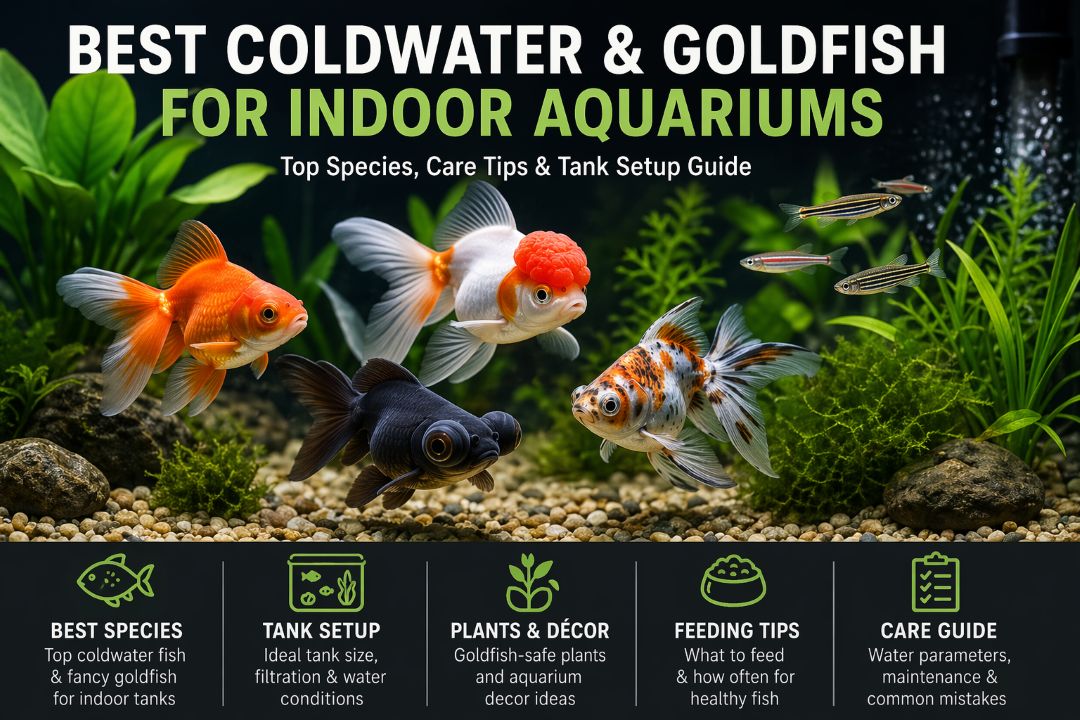
Keeping coldwater fish indoors can be both relaxing and rewarding — and contrary to popular belief, it’s not just about goldfish in bowls! With the right setup and care, coldwater aquariums can be beautiful, lively displays filled with personality and colour. At Birchwood Aquatic Centre in Swanley, we hand-select our coldwater and fancy goldfish for health, quality, and variety — from the classic Fantail to the elegant Oranda. This guide will help you choose the right species, understand their care needs, and avoid common mistakes.
Popular Coldwater Fish for Indoor Aquariums
Fancy Goldfish (Best for Indoor Tanks)
- Fantail Goldfish – Hardy and easy to care for; ideal starter fish.
- Oranda – Recognisable by their soft head growth (“wen”).
- Ryukin – Chunkier body with vibrant colours and long fins.
- Ranchu / Lionhead – Round-bodied, slow swimmers, no dorsal fin.
- Black Moor – Gentle, velvety black fish with telescope eyes.
Tip: Keep fancy goldfish only with other fancy varieties — they’re slower swimmers and can’t compete with faster, single-tail goldfish.
Other Coldwater Fish That Thrive Indoors
- White Cloud Mountain Minnows – Peaceful, small fish that tolerate cooler temperatures.
- Zebra and Leopard Danios – Active schooling fish that prefer cooler, oxygen-rich water.
- Hillstream Loach – Unique appearance; prefers cooler, fast-flowing setups.
Note: Most coldwater species should not be mixed with goldfish due to differences in diet, waste levels, and temperature preferences.
Ideal Tank Conditions
- Temperature: 18–22°C (room temperature for most homes)
- pH: 7.0–8.0
- Ammonia & Nitrite: Always 0 ppm
- Nitrates: Keep below 40 ppm (ideally below 20 ppm)
- Water changes: 25–50% weekly (stock dependant)
Plants & Décor
Choose hardy plants that tolerate cooler water and won’t be eaten easily:
Anubias, Java Fern, Bolbitis, Elodea, and Hornwort are excellent choices.
Attach plants to rocks or wood instead of planting in gravel to prevent uprooting.
Feeding
Feed small amounts 1–2 times a day. Use sinking pellets or gel food to avoid air intake and buoyancy issues.
Supplement with blanched vegetables such as spinach, courgette, or peas to support digestion and prevent swim bladder problems.
Common Mistakes to Avoid
- Keeping single-tail goldfish (Common, Comet, Shubunkin) in small indoor tanks — they need ponds or very large aquariums.
- Mixing fancy and single-tail goldfish — they have different needs.
- Skipping the nitrogen cycle before adding fish.
- Overfeeding and under-filtering.
- Using sharp gravel or décor that can damage fins or eyes.
Learn how to prepare your aquarium properly: Tropical Aquarium Setup Guide
Frequently Asked Questions
Can goldfish live indoors without a heater?
Yes. Most UK homes maintain temperatures ideal for fancy goldfish (18–22°C). Just avoid placing tanks near radiators or draughty windows.
How many fancy goldfish can I keep in a 180-litre tank?
Start with two goldfish — allow around 100L for the first, and an extra 40–50L for each additional fish.
Can goldfish live with other coldwater fish?
It’s best to keep goldfish with goldfish only. Smaller species like minnows may be outcompeted or accidentally eaten.
Do I need an air pump?
Goldfish are quite tolerant of lower oxygen levels compared to many fish, but they still thrive in well-oxygenated water. A strong filter that creates good surface movement is usually enough, but adding an air pump or airstone can improve oxygen levels further—especially in heavily stocked tanks or warmer conditions.
What’s the difference between single-tail and fancy goldfish?
Single-tails (like Comets and Commons) are larger, faster pond fish. Fancy varieties have double tails and rounder bodies, making them ideal for indoor aquariums.
Which plants won’t be eaten by goldfish?
Try Anubias, Java Fern, or Bolbitis attached to rocks or wood. Fast-growing plants like Elodea can also help absorb excess nutrients.
My goldfish has buoyancy issues — what should I do?
Stop feeding for 24 hours, then feed peeled, cooked peas. Check your water quality — poor conditions can worsen swim bladder problems.
What are the first steps after buying new fish?
Float the bag for 15–20 minutes to equalise temperature, then slowly mix tank water into the bag before releasing the fish. Keep lights low for a few hours.
Useful Links
Need Help Choosing the Right Fish?
Visit Birchwood Aquatic Centre, London Road, Swanley, BR8 7QD — or call 01322 664397 for personalised advice.
Our team can help you build a beautiful, balanced coldwater setup and hand-select the healthiest fish for your home.