Aquarium Heating & Cooling Guide
Keeping Your Aquarium at the Perfect Temperature
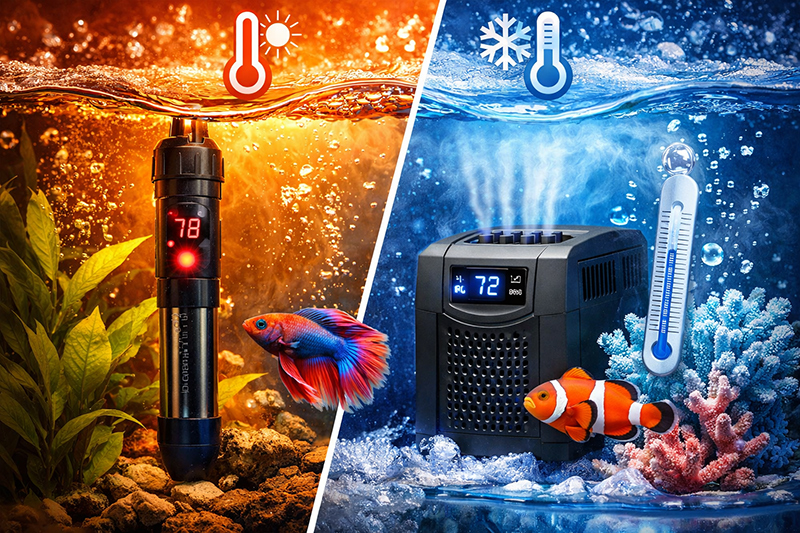
Maintaining a stable water temperature is one of the most important aspects of keeping your fish healthy and stress-free. Whether you’re setting up a tropical, cold water, or marine tank, understanding how to heat or cool your aquarium correctly will help you create a safe and thriving environment for your aquatic life. At Birchwood Aquatic Centre, we supply high-quality aquarium heaters, thermometers, chillers, and cooling fans, and our expert team can help you choose the best setup for your tank.
Why Temperature Control Matters
Fish are ectothermic (cold-blooded), meaning their body temperature depends on the surrounding water. Sudden changes can lead to stress, illness, or even death.
Maintaining a consistent, species-appropriate temperature is essential for:
- Healthy metabolism and growth
- Stable immune systems
- Comfortable feeding and breeding behaviour
- Reduced risk of disease and temperature shock
Ideal Temperature Ranges
| Aquarium Type | Typical Range | Notes |
|---|---|---|
| Tropical Freshwater | 24–27°C (75–81°F) | Most community fish thrive here. |
| Marine / Reef | 25–26°C (77–79°F) | Stability is vital for corals and invertebrates. |
| Coldwater (e.g., Goldfish) | 18–22°C (64–72°F) | Avoid overheating; ideal for unheated rooms. |
💡 Tip: Always research your specific species — some tropical fish (like Discus) prefer slightly higher temperatures around 28–30°C.
🔥 Heating Your Aquarium
For tropical or marine tanks, a reliable heater is essential.
Types of Aquarium Heaters:
- Submersible Heaters: The most common type, fully placed inside the tank for even heat distribution.
- Inline Heaters: Installed in your external filter tubing for a tidier look.
- Heater Thermostat Combos: Automatically maintain your set temperature for convenience and safety.
Choosing the Right Size:
As a rule of thumb, use 1 watt of heating per litre of water (or 3–5 watts per gallon). For example, a 100-litre aquarium usually needs a 100W heater.
In larger tanks, using two smaller heaters offers better heat distribution and redundancy if one fails.
❄️ Cooling Your Aquarium
Overheating can be just as dangerous as cold water — particularly in summer or for marine aquariums with lighting and equipment that generate extra heat.
Ways to Cool Your Aquarium:
- Cooling Fans: Blow air across the water surface to reduce heat through evaporation.
- Aquarium Chillers: Thermostatically controlled devices that lower the water temperature precisely — ideal for reef setups.
- Reduce Lighting Hours: Especially useful for tanks lit by strong LEDs or halides.
- Float Ice Bottles (Short-Term Fix): Temporary solution for emergency cooling, but use cautiously to avoid sudden drops.
Monitoring & Stability
Always use a digital thermometer or built-in controller to monitor temperature accurately.
Position your heater or cooling equipment near water circulation (like filter outflows) for even heat distribution.
Regularly check for fluctuations — even a few degrees’ swing can stress sensitive species.
Equipment Available at Birchwood Aquatic Centre
Visit us in-store or contact us for:
- Digital thermometers & controller units
- Submersible and inline heaters
- Cooling fans & chillers
- Replacement heater guards and suction mounts
- Expert advice on choosing the correct wattage and placement
Frequently Asked Questions
How do I know if my aquarium needs a heater?
If you keep tropical or marine fish, a heater is essential to maintain a consistent warm temperature. Cold water species like goldfish typically don’t need one, as they prefer cooler water.
Can I use two smaller heaters instead of one large one?
Yes! Using two heaters (half the required wattage each) helps distribute heat evenly and ensures backup if one fails.
How often should I check my aquarium temperature?
Check daily if possible — a quick glance at your thermometer ensures stability and can catch problems early.
What happens if my tank gets too hot?
High temperatures reduce oxygen levels and stress your fish. Use a fan or chiller, reduce lighting, and perform small cool water changes to stabilise the tank.
Where should I place my heater in the tank?
Install it near the filter outlet or circulation pump so warm water spreads evenly throughout the aquarium.
How do I cool my tank without a chiller?
Simple options include opening the lid slightly, increasing surface agitation, using a fan, or freezing a bottle of water and floating it in the tank (temporarily).
Can temperature affect breeding or feeding?
Yes. Many species only breed or feed actively within a narrow temperature range. Keeping water stable helps encourage natural behaviour.
My heater light is on but the water feels cold — what should I do?
Your heater might be faulty or undersized. Check it with a separate thermometer and consider replacing it if it’s not maintaining temperature.