Pond Filter Problems & Poor Circulation
(Causes and Fixes)
Pond filter problems are one of the most common causes of poor water quality, algae outbreaks, and fish stress. If water flow slows down or circulation is reduced, ponds can quickly fall out of balance — particularly in spring and summer when fish activity increases.
Understanding how pond filters work, why problems occur, and how to fix them early helps keep water clear and healthy all season long.
Signs Your Pond Filter Isn’t Working Properly
Common signs of filter or circulation issues include:
Reduced water flow from waterfalls or returns
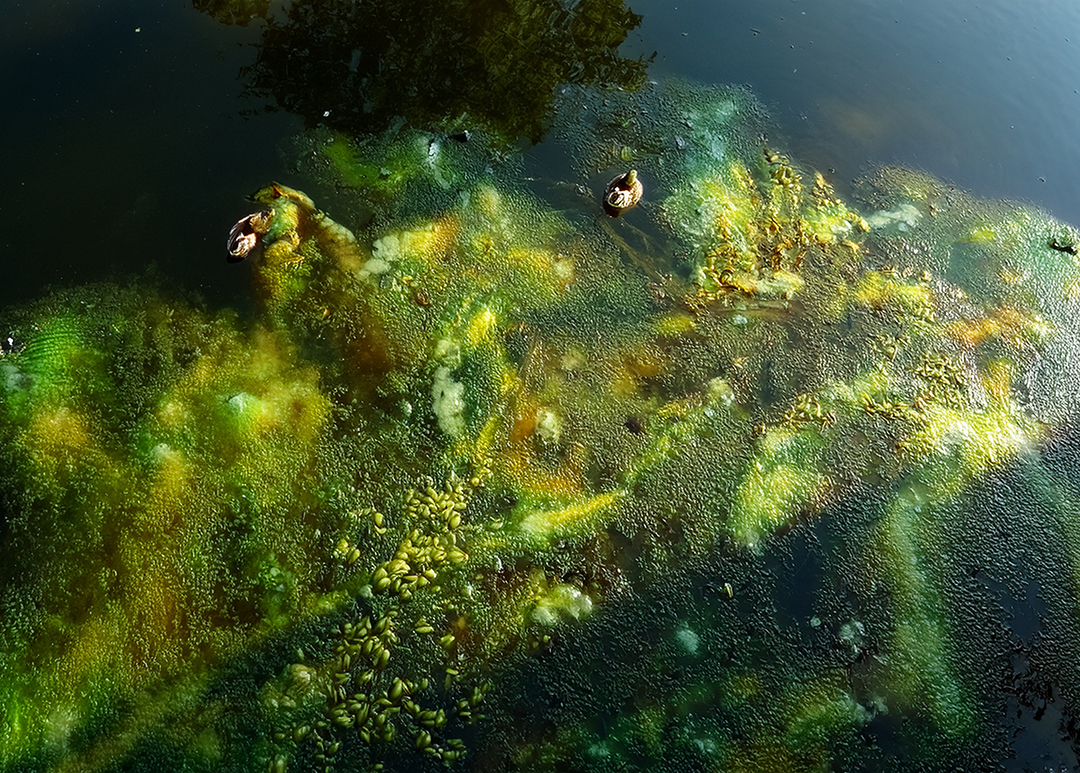
Cloudy or green water
Algae problems appearing suddenly
Debris settling on the pond bottom
Fish spending more time near the surface
These symptoms often point to restricted flow, clogged media, or an undersized system.
Why Pond Filter Problems Occur
Pond filters can struggle for several reasons, especially at the start of the season:
Filters not fully cleaned after winter
Sludge, leaves, and debris blocking sponges or media
Pumps partially clogged or impellers jammed
Filter or pump too small for pond size or fish stock
Beneficial bacteria not yet established in spring
As fish become more active and feeding resumes, the load on filtration increases rapidly.
Common Pond Filter Issues Explained
Blocked Filter Media
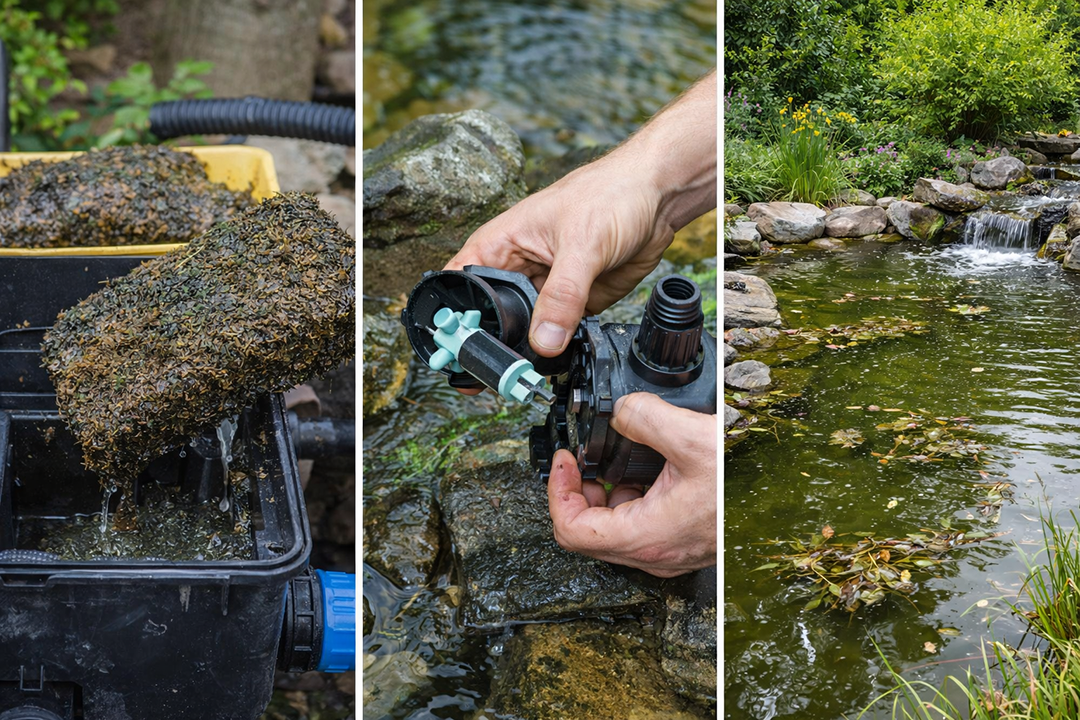
Sponges and filter media can clog with waste, reducing flow and effectiveness. This is one of the most common problems seen in spring.
Pump Blockages
Debris can collect around pump inlets or impellers, restricting water movement and causing noise or overheating.
Poor Circulation
Even if the filter is working, poor return placement or low flow rates can leave “dead spots” where waste builds up.
Undersized Equipment
As ponds mature and fish grow, older filtration systems may no longer be adequate.
How to Fix Pond Filter & Circulation Problems
1. Clean Filters Correctly
Rinse filter sponges and media in pond water (not tap water) to preserve beneficial bacteria. Avoid over-cleaning everything at once.
2. Check and Clean the Pump
Inspect the pump inlet and impeller for debris. Even small blockages can dramatically reduce flow.
3. Improve Water Movement
Ensure returns, waterfalls, or fountains create good circulation across the pond surface and depth.
4. Review Pond Size vs Equipment
Check that your filter and pump are correctly sized for your pond volume and fish stock, not just the water volume alone.
5. Support Beneficial Bacteria
Adding beneficial bacteria helps filters mature faster, particularly in spring. Pond Bombs are a great product for adding beneficial bacteria.
Preventing Filter Problems Long Term
Good filtration relies on regular maintenance:
Remove debris and sludge regularly
Avoid overfeeding fish
Clean filters little and often
Monitor flow rates and water clarity
A well-maintained filter is the foundation of a healthy pond.
Other Common Spring Pond Problems
Filter issues often link directly to other seasonal pond problems such as green water, blanketweed, duckweed, and fish stress.
👉 Read our full guide to common spring pond problems
Fixing filtration issues early often resolves multiple problems at once.
Need Help With Pond Filtration?
If you’re unsure whether your filter or pump is suitable, or you’re struggling with ongoing water quality issues, the team at Birchwood Aquatic Centre can help.
We stock pond filters, pumps, UV clarifiers, beneficial bacteria, and spare parts — and we’re always happy to give honest advice. Bring in details of your pond or a water sample and we’ll help you get things flowing properly again.