Understanding the Nitrogen Cycle in Aquariums
If you’re new to fishkeeping, one of the most important things to learn is the nitrogen cycle — the natural biological process that keeps your aquarium water safe for fish. Without a healthy nitrogen cycle, toxins can quickly build up and harm or kill your fish.
At Birchwood Aquatic Centre, we help you understand how to create and maintain a balanced environment, so your fish thrive in clean, healthy water.
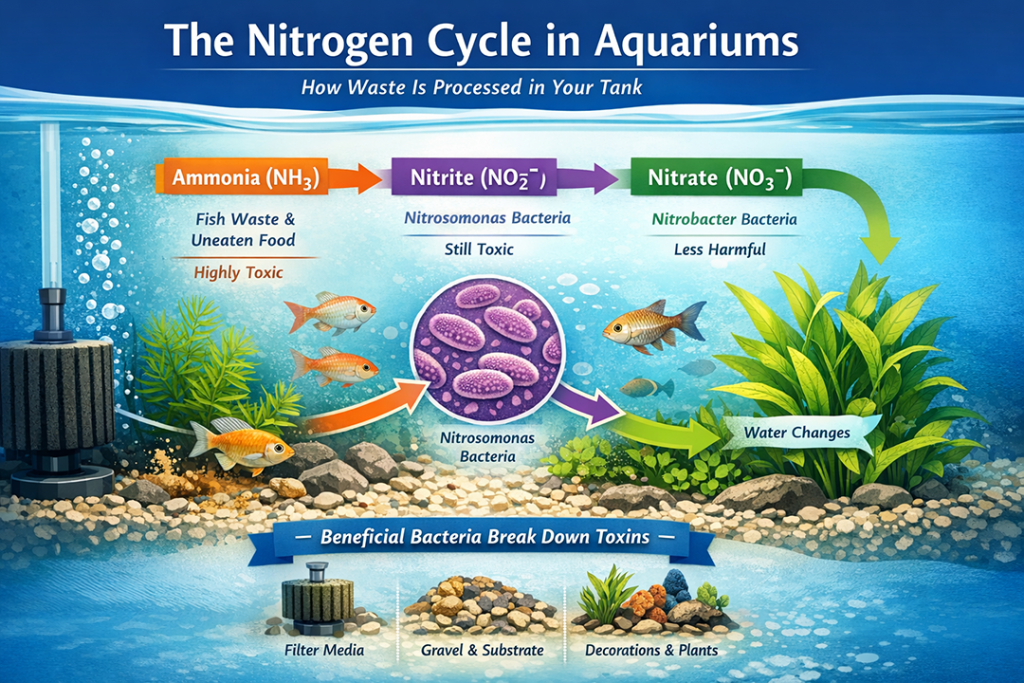
What Is the Nitrogen Cycle?
The nitrogen cycle is nature’s way of breaking down waste in your aquarium. It involves beneficial bacteria converting harmful compounds from fish waste, leftover food, and decaying plants into safer substances.
Here’s how it works step-by-step:
Ammonia (NH₃) – Produced from fish waste, uneaten food, and decaying matter. This is highly toxic to fish even in small amounts.
Nitrite (NO₂⁻) – As the tank matures, a type of bacteria (Nitrosomonas) develops that converts ammonia into nitrite. Nitrite is also toxic to fish.
Nitrate (NO₃⁻) – A second type of bacteria (Nitrobacter) converts nitrite into nitrate, which is far less harmful. Nitrate levels should still be kept low through regular water changes and plant uptake.
When this cycle is complete, your aquarium becomes biologically balanced — meaning it can process fish waste safely and maintain stable water quality.
How Long Does Cycling Take?
Traditionally, cycling a new aquarium from scratch can take 4–6 weeks while beneficial bacteria naturally grow in the filter and substrate.
However, modern aquarium products now contain live beneficial bacteria, which can dramatically speed up this process.
With the right setup and bacterial starter, many aquariums can begin supporting fish within 24–72 hours, provided fish are added gradually and the water is monitored.
Even when using bacteria starters, the aquarium will continue to mature over several weeks, and it’s important to test the water regularly and avoid overstocking.
At Birchwood Aquatic Centre, we usually recommend:
- Add a good quality bacteria starter
- Introduce a small number of fish after 2–3 days
- Test water regularly in the first few weeks
- Increase stock gradually as the tank matures
Why Beneficial Bacteria Are So Important
The bacteria responsible for the nitrogen cycle live on surfaces in your aquarium — in the filter sponges, gravel, plants, and decorations. That’s why cleaning them in tap water can kill the bacteria due to chlorine or chloramine. Always rinse these items in removed tank water during maintenance.
Maintaining a Healthy Cycle
To keep your aquarium’s nitrogen cycle balanced:
Do weekly 20–25% water changes using dechlorinated water.
Avoid overfeeding fish.
Use a liquid test kit to monitor ammonia, nitrite, and nitrate levels.
Add live plants to help absorb excess nitrates.
Never replace all filter media at once — stagger replacements so bacteria populations remain stable.
Signs of an Unbalanced Cycle
If your nitrogen cycle is struggling, you may notice:
Cloudy or smelly water
Fish gasping at the surface
Algae blooms
Elevated ammonia or nitrite readings
Act quickly by performing partial water changes, checking your filtration system, and avoiding adding more fish until levels stabilise.
Frequently Asked Questions
Can I speed up the nitrogen cycle?
Yes — by adding a small amount of filter media, gravel, or water from an already established tank, or by using bottled bacterial starters available in-store.
Why do my fish look stressed during cycling?
Ammonia or nitrite levels may be too high. Carry out a partial water change immediately and test the water again.
What should ammonia and nitrite levels be in a cycled tank?
Both should read 0 ppm (parts per million). Nitrate should ideally be below 40 ppm
Can plants replace the need for filtration?
No — while plants help absorb nitrate, you still need a biological filter to complete the nitrogen cycle effectively.
Do I need to cycle if I use pre-treated water?
Yes. Tap-safe removes chlorine and chloramine but doesn’t create beneficial bacteria — the nitrogen cycle must still be established naturally.
Visit Us in Swanley for Expert Aquarium Advice
At Birchwood Aquatic Centre, our team can help you test your aquarium water, recommend the best filter bacteria boosters, and guide you step-by-step through the cycling process.
📍 Birchwood Aquatic Centre, London Road, Swanley, Kent, BR8 7QD
💧 Visit us in-store or contact us online for free water testing and expert advice!