Blanketweed and String Algae in Ponds
(Causes and How to Control It)
Blanketweed and string algae are among the most common pond problems, especially in spring and early summer. While a small amount of algae is natural and even beneficial, excessive growth can quickly spoil the appearance of a pond, smother plants, and interfere with filtration.
Understanding why blanketweed and algae appears — and how to control it properly — is the key to long-term success.
What Is Blanketweed (String Algae)?
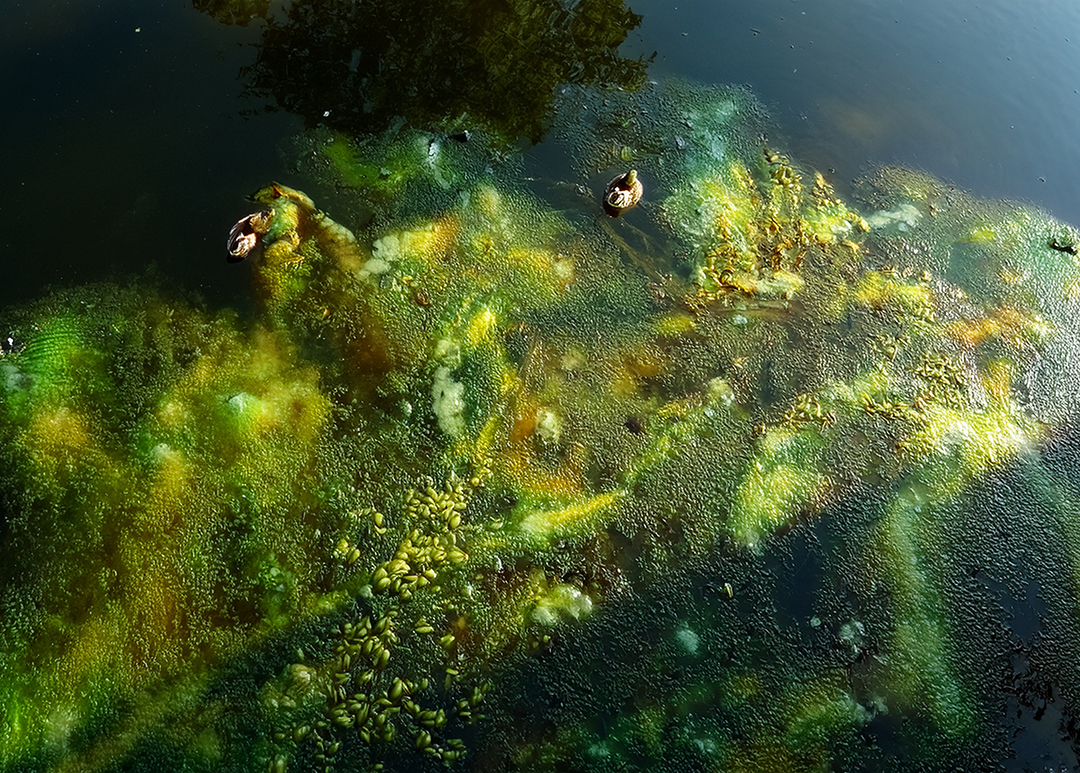
Blanketweed, also known as string algae, is a type of filamentous algae that forms long green strands. It often attaches itself to rocks, plants, waterfalls, and pond liners, creating clumps or floating mats that can spread quickly.
Unlike green water (which is caused by microscopic algae), blanketweed is visible to the naked eye and can usually be removed by hand.
Why Blanketweed Appears in Ponds
Blanketweed thrives when conditions favour algae over plants and beneficial bacteria. Common causes include:
Excess nutrients from fish waste and decomposing leaves
Increased sunlight, particularly in spring
Low plant growth early in the season
Poor circulation or undersized filtration
Ponds that were not fully cleaned after winter
Spring is the peak time for blanketweed because pond plants are still waking up, leaving algae free to take advantage of available nutrients.
Is Blanketweed Harmful?
In small amounts, blanketweed isn’t dangerous. However, if left uncontrolled it can:
Smother pond plants
Reduce water circulation
Trap debris and waste
Compete with plants for oxygen, particularly overnight
Managing it early prevents more serious water quality problems later in the season.
How to Control Blanketweed & String Algae
1. Manual Removal
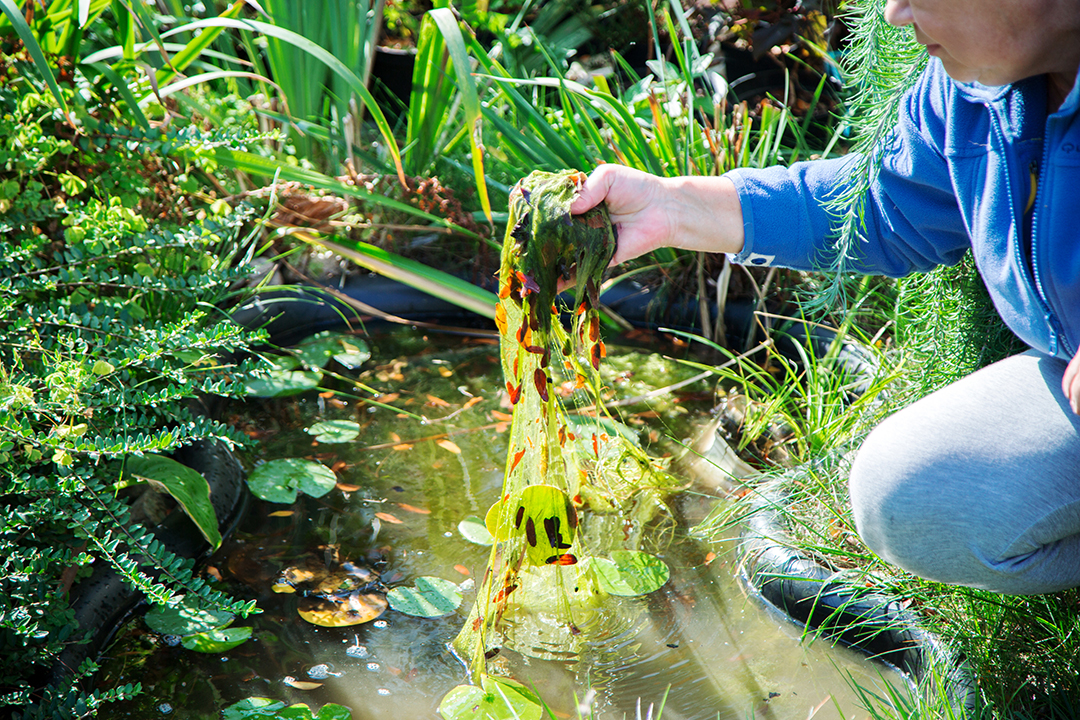
Physically removing blanketweed using a net, brush, or algae twister is the quickest way to reduce visible growth. While this won’t solve the underlying cause on its own, it removes nutrients locked within the algae and gives you a clean starting point.
2. Improve Filtration & Circulation
Ensure your pond pump and filter are correctly sized and fully operational. Good water movement discourages algae growth and supports beneficial bacteria.
👉 Read our full guide to Pond Filter Problems
3. Reduce Excess Nutrients
Remove fallen leaves and sludge
Avoid overfeeding fish
Clean filters regularly (without killing beneficial bacteria)
The less food available for algae, the harder it is for blanketweed to thrive.
4. Encourage Healthy Plant Growth
Aquatic plants compete with algae for nutrients and light. As plants establish, blanketweed naturally becomes less dominant.
Using Barley Straw for Blanketweed Control
Barley straw is a popular natural, preventative method for controlling blanketweed. As it breaks down slowly in the pond, it releases compounds that help inhibit algae growth.
Barley straw works best when:
Added early in the season
Placed in areas with good water flow
Used as part of a wider maintenance routine
It’s important to note that barley straw is not an instant cure, but it can be very effective at preventing blanketweed from becoming established.
When to Use Blanketweed Treatments
If blanketweed is persistent or widespread, targeted treatments may be required. These should always be used according to instructions and alongside good pond maintenance.
Blanketweed treatments work best when:
Excess algae has already been removed manually
Filtration is running efficiently
Nutrient levels are under control
If you’re unsure which treatment is suitable for your pond, getting advice before dosing is always recommended.
Preventing Blanketweed Long Term
The best way to manage blanketweed is prevention:
Maintain good filtration year-round
Remove organic waste regularly
Support beneficial bacteria
Avoid sudden changes to feeding or stocking levels
A balanced pond will naturally resist excessive algae growth.
Need Help With Blanketweed in Your Pond?
If blanketweed keeps returning or you’re unsure how to tackle it safely, the team at Birchwood Aquatic Centre can help.
We stock a wide range of blanketweed treatments, barley straw products, filters, and pond maintenance equipment — and we’re always happy to offer honest, practical advice. Bring in a water sample or visit us in store for tailored help getting your pond back under control.
Other Common Spring Pond Problems
Blanketweed and string algae are just one of several issues that can appear as ponds wake up after winter. Other spring-related problems often include green water, duckweed, filter performance issues, and changes in fish behaviour as temperatures rise.
If you’re experiencing more than one problem, our main guide covers the most common seasonal issues and how to deal with them safely and effectively.
👉 Read our full guide to common spring pond problems
Addressing pond issues early in the season helps prevent long-term water quality problems and keeps your pond healthy and enjoyable throughout the year.